Panic buttons, undercover cops: How Peru bus drivers try to stay safe / Photo: © AFP




From undercover police to panic buttons, bus drivers in Peru's capital Lima are pulling out all the stops to protect themselves from attack by extortion gangs, a key theme in Sunday's presidential election.
Racketeering has taken on epic proportions in Peru in recent years, with bus companies among the most common targets of gangs who demand huge sums of money in return for protection from attack.
Failure to pay can spell mortal danger for the vehicle operators.
At least 75 bus drivers were murdered in 2025 in the South American nation, primarily in Lima, according to police data.
Some were gunned down in front of their passengers.
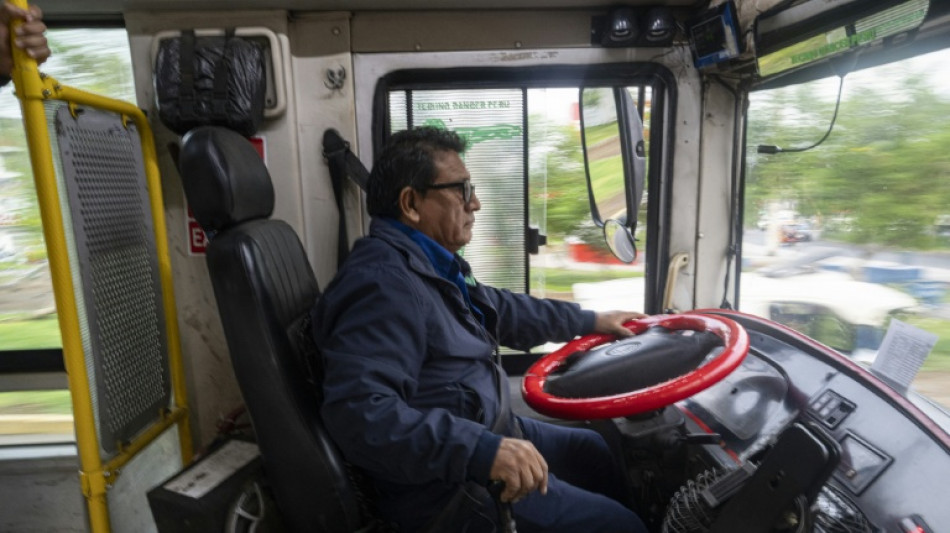
In the low-income Lima district of San Juan de Lurigancho, one of the areas hardest hit by the crime wave, 58-year-old Zacarias Lopez slid nervously behind the wheel to start his work day.
He spent the next 15 hours crisscrossing the dusty avenues of eastern Lima, passing walls plastered with campaign posters.
Most of the record 35 candidates vying to become president have promised a crackdown on crime.
"They promise and never deliver. They play with our feelings, and we keep getting shot," said Lopez, who said he fears "not returning home alive."
Extortionists also shake down private schools and small businesses of all kinds, from hairdressers to grocery stores.
Peru is experiencing its worst security crisis since a bloody conflict between 1980 and 2000 that pitted the state against Maoist guerrillas.
From 2018 to 2025, the number of reported murders rose from 1,000 to 2,600 a year, while reported extortion cases jumped more than eightfold to 26,500.
The surge in crime has coincided with the arrival of transnational criminal syndicates who compete with local gangs for control of cocaine trafficking routes, illegal gold mines and extortion rings, among other rackets.
- Broken promises -
The situation has forced bus companies like Lopez's employer Santa Catalina transport company to boost their defenses.
A video surveillance center was inaugurated on Wednesday at Santa Catalina's depot to monitor buses in real time using closed circuit TV cameras.
The drivers now also have panic buttons at their fingertips and sometimes backup from police officers, who come aboard, either in uniform or plainclothes, for the most dangerous stretches of the journey.
But some drivers and passengers say the measures fall short.
A banner with black ribbons erected in the Santa Catalina terminal in memory of a murdered driver serves as a reminder of the dangers.
"If the criminal comes up behind me... I won't even have time to press the button," said Lopez as he collected fares from passengers.
"There's no security anywhere," said 70-year-old Maruja Castillo, who took the bus to go to the doctor.
Many of Santa Catalina's drivers have quit out of fear of attack from any one of the six extortion gangs that have targeted the business in recent months.
Posters on the vehicles advertise for new drivers.
"We've seen promises that have never been kept, but we haven't lost hope that an incoming government will improve" the situation, said Eiffel Calla, 38, the company's head of security.
The violence has led to a race to the right on the campaign trial, with candidates vying to outdo each other with hardline proposals to crack down on crime.
Former Lima mayor Rafael "Porky" Lopez Aliaga has vowed to build prison colonies in the jungle, ringed by deadly snakes.
TV comedian Carlos Alvarez said he would bring back the death penalty for hitmen.
"All the candidates are going to say what the people want to hear, but whether they'll actually deliver on their promises is another story," said passenger Victoria Perez, 49.
On the eve of the election, she was among the 16 percent of Peruvians still undecided about which way to vote, according to an Ipsos poll.
L.Bennett--VC