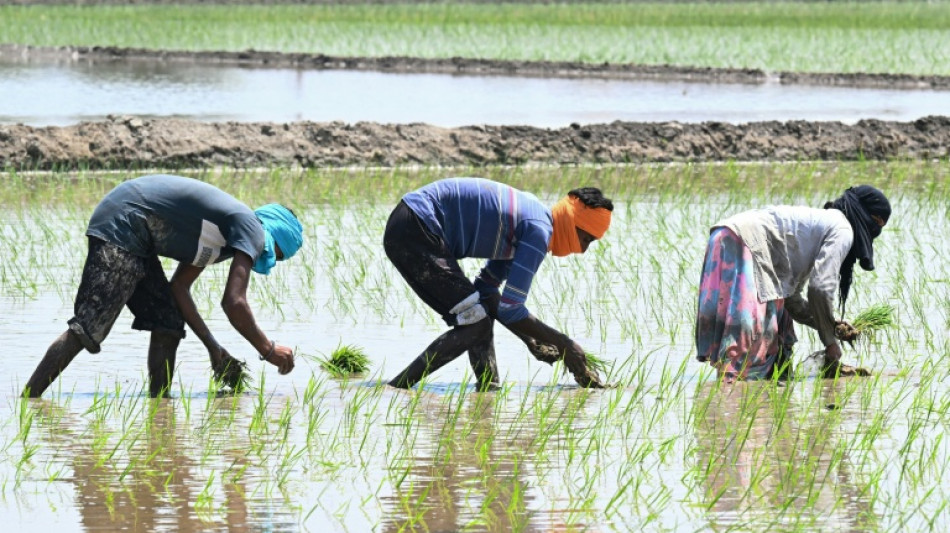
India braces for El Nino-linked dry conditions / Photo: © AFP/File




India will prepare contingency plans to help farmers weather potential low rainfall linked to the El Nino weather system, agriculture officials said Tuesday.
El Nino is a naturally occurring climate phenomenon that brings worldwide changes in winds, air pressure and rainfall patterns. In India and Southeast Asia, it typically causes drier conditions.
The last El Nino helped make 2023 and 2024 the two hottest years on record.
"Full preparations should be made in advance in those districts where there is a possibility of low rainfall or uneven rainfall," Agriculture Minister Shivraj Chouhan said, according to an official statement.
"Such districts should be clearly identified and crop-wise contingency plans should be prepared... so that farmers can be provided immediate alternatives, advice and support."
In regions where the impact of El Nino is expected to be particularly severe, Chouhan called for awareness campaigns "so that every farmer knows what precautions and which crop options are safer for his area".
Forecasters have predicted below-average monsoon rainfall in India this year, estimating precipitation at about 90 percent of the long-term average.
The Indian Meterological Department has warned of a 60-percent probability of a deficient monsoon, raising alarm among policymakers and farmers.
The agricultural sector helps sustain over 45 percent of people in India, the world's most populous nation with more than 1.4 billion people.
The US weather agency said on Thursday that El Nino had arrived, with scientists expect the pattern synonymous with droughts, floods and soaring temperatures will intensify into the end of the year, potentially to historic strength.
Scientists fear it will exacerbate the heat of a planet already warming from burning fossil fuels, while amping up weather extremes.
Every El Nino is different, but major events often follow familiar patterns. This includes drought across parts of the Amazon, Indonesia and Australia, disrupted monsoons in India, and shifting rainfall throughout the tropics.
F.Patel--VC