Startup turns Chennai’s history and culture into an interactive world

Layerpath founder Vinay Chandrasekaran has developed a collection of digital projects that presents Chennai’s history through animation, a browser game and an interactive three-dimensional environment known as The Madras Project.
Layerpath founder Vinay Chandrasekaran has developed a collection of digital projects that presents Chennai’s history through animation, a browser game and an interactive three-dimensional environment known as The Madras Project. The work began around Chennai Day, observed on August 22. Chandrasekaran said social-media posts marking the city’s 387th anniversary led him to question why Chennai’s public history was often framed around fewer than four centuries when settlements and cultural activity in the region extend back much further.
After encountering unverified AI-generated material online, he spent two days researching the origin of the city’s name, the basis for Chennai Day and the historical debate over whether Madras was founded in July or August. He then used Claude Opus 5.5 to help turn the verified information into a coded video rather than relying on generated images. The resulting 20-second film uses a continuous kolam line to represent roughly 380 years of the city. It includes the coast, temples, Fort St George, Royapuram railway station, Thyagaraya Nagar and the Chennai Metro. Chandrasekaran spent about five hours producing the horizontal video and published it on Instagram in September.
He also created the soundtrack, using a flute melody in raga Bowli and a bell sound each time the kolam crosses itself. After the video attracted attention, he used the following weekend to build Madras Rush, a browser game based on the same research. The game moves through documented events such as Francis Day and Andrew Cogan arriving in Madrasapatnam in 1640, the creation of the Corporation of Madras by charter in 1687, the first lighthouse being lit on the Exchange roof inside the fort in 1796 and the opening of Madras Central station in 1873.
Building the initial game took about two hours, while adapting it to work properly on mobile screens required another 20 hours. Chandrasekaran said the facts were first gathered with AI tools and then checked against government portals, newspaper archives and books, with the sources recorded in the project. What began as a Chennai Day experiment then expanded into an effort to create visual records from documented history. Chandrasekaran said the verified information is encoded with the assistance of GPT-6 Astra and Claude Fable because code offers greater flexibility, maintainability and access than current image-generation systems.
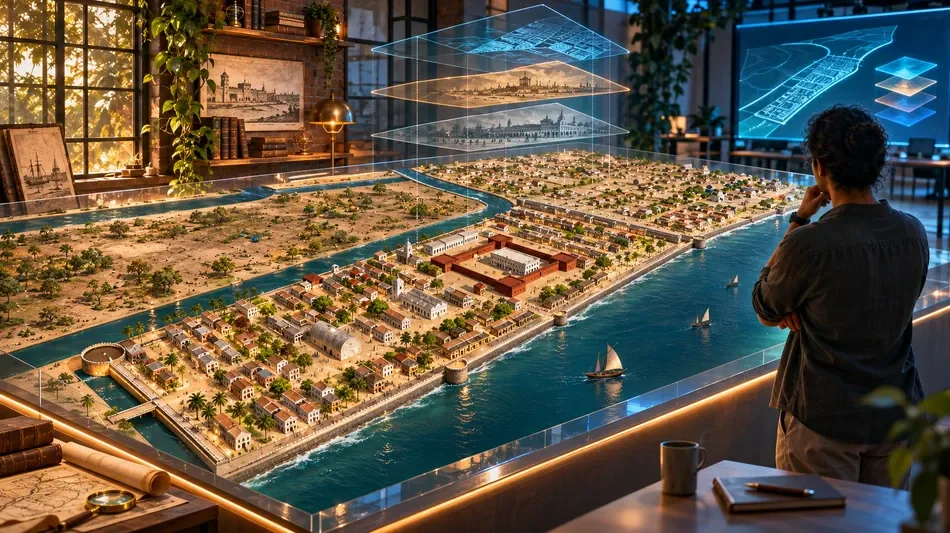
The material is converted into two-dimensional assets, developed into 3D models in Blender and rigged with digital skeletons. The environment includes fishing settlements, East India Company structures, homes, courtyards, warehouses, patterns of trade and other elements intended to represent everyday life during different periods. Chandrasekaran said he had spent almost $2,000 and assembled about 130 gigabytes of data over two months. The Madras Project is intended to let users view Chennai from the coast, the fort or the town and interact with residents, British officials and locations within the historic environment.
The proposed role-playing functions would allow visitors to enter buildings, inspect coastal defences and explore how people lived and worked. Chandrasekaran is now creating a pipeline that could allow contributors to develop similar evidence-based experiences for other cities, temples, churches and mosques. He plans to make parts of the initiative open source so that other communities can build their own historical environments. The broader aim is to connect Chennai’s familiar modern identity with the longer and more complex history documented across the region.
The project also seeks to make historical research more accessible to people who may not encounter it through conventional archives. Its combination of verified data, code, music and interactive design is intended to let users explore the city as an evolving place rather than as a collection of isolated dates. Chandrasekaran said the same production method could be adapted while keeping the evidence visible and the underlying material maintainable. That approach would allow future contributors to update a location as new research becomes available instead of rebuilding the entire experience.
X.Baker--VC