Tesla profits tumble on lower EV sales, AI spending surge / Photo: © AFP/File



Tesla reported a 61-percent drop in fourth-quarter profits on Wednesday due to lower auto sales and increased expenses as CEO Elon Musk ramps up technology investments.
The results conclude a turbulent year for the electric vehicle maker that included a controversial Musk stint in Donald Trump's White House and a shareholder vote in November to award the outspoken CEO a pay package worth as much as $1 trillion in anticipation of massive technology breakthroughs at Tesla.
Profits came in at $840 million in the quarter ending December 31, down from $2.1 billion a year earlier.
Revenues were $24.9 billion, down 3.1 percent.
Lower profits had been expected after Tesla reported a drop in fourth-quarter and full-year auto deliveries early in January.
But a company presentation also cited a litany of other factors. These included higher restructuring costs, increased research and development funding for AI pursuits, the drag from higher tariffs and a decline in revenues tied to emission tax credits following Trump's reversals on US environmental policies.
Tesla's outlook did not include a projection for its expected 2026 auto sales.
In its January 2025 earnings release, Tesla said it expected a "return to growth" in vehicle sales. But Tesla's 2025 auto sales fell nine percent to 1.6 million.
That decline came as Tesla faced increased competition from rivals, including China's BYD, and as Musk faced blowback over his embrace of Trump and far-right political figures.
This time, Tesla said it was focused on "maximum capacity utilization" at factories, adding that total deliveries would depend on "aggregate demand for our products" and other factors.
- Unrealistic timing? -
Shares of Tesla rose sharply in the second half of 2025 after Musk left the White House in spite of weaker financial results that Tesla investment bulls argue are less important compared with Tesla's growth potential.
Musk has touted Tesla's technological prowess on artificial intelligence and autonomous driving as a decisive advantage against rivals that justifies the company's lofty stock market valuation. The company describes itself as in "transition from a hardware-centric business to a physical AI company."
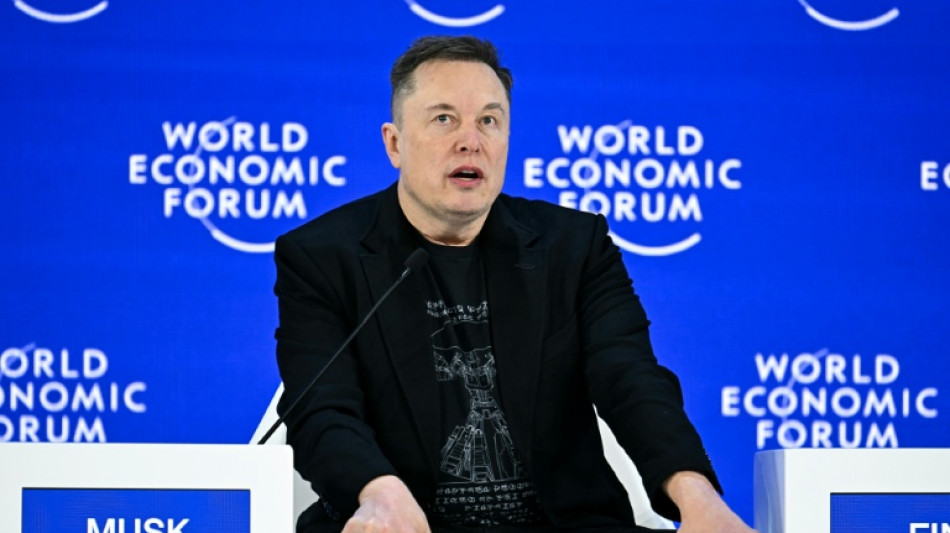
At the World Economic Forum earlier this month, Musk described self-driving cars as "essentially a solved problem at this point," adding that the service will be "very widespread" in the United States by the end of 2026.
But Tesla's "near-term" execution risk is "high," according to a note earlier this month from CFRA Research that pointed to a series of Musk 2026 targets, including the start of significant Cybercab production.
"Musk has a poor track record of delivering on his promises, but the market has been forgiving," CFRA said.
Ahead of Wednesday's release, investors were keen for updates on plans to expand robotaxi beyond initial test venue Austin.
Musk has also spoken optimistically about the expected growth in revenue tied to subscriptions of the driver-assistance "FSD" program. Only 12 percent of Tesla's current fleet participates in the program, Tesla officials said in October.
CFRA analyst Garrett Nelson said he was "skeptical" of Musk's comments suggesting wide deployment of autonomous driving technology as soon as 2026.
Included in Wednesday's earnings press release, Tesla disclosed that it entered into an agreement on January 16 to invest $2 billion in Musk's xAI artificial intelligence venture.
A "framework" accord "builds upon the existing relationship between Tesla and xAI by providing a framework for evaluating potential AI collaborations between the companies," said Tesla, adding that the investment agreement is expected to close in the first quarter.
Tesla shares rose 3.0 percent in after-hours trading.
J.White--VC