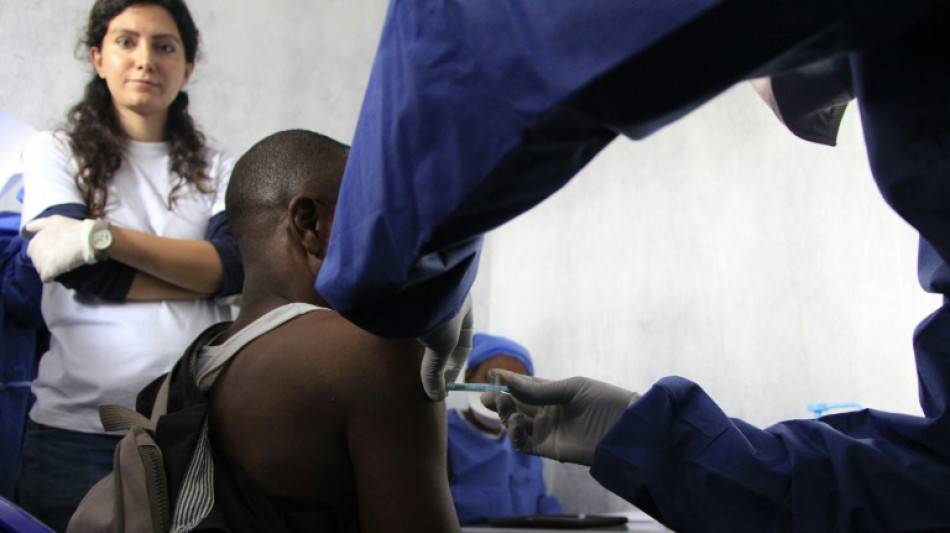
DR Congo says latest Ebola outbreak is over / Photo: © MSF/AFP




Health authorities in the Democratic Republic of Congo on Monday declared an end to the latest outbreak of Ebola, which has caused at least 34 deaths since August.
The virus, which is often fatal despite recent advances in vaccines and treatment, has caused 15,000 deaths in Africa in the last 50 years.
The deadliest outbreak in DR Congo between 2018 and 2020 killed nearly 2,300 people out of 3,500 infected.
The head of the National Institute of Public Health (INSP), Dieudonne Mwamba Kazadi, said the outbreak had "effectively ended".
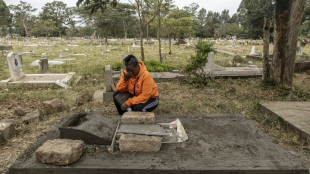
Kazadi said there had been at least 34 fatalities from 53 confirmed cases. A further 11 deaths appear to have been caused by the virus, taking the likely total deaths to 45, he added.
All indications "attest that the chain of transmission of the virus have been broken," Health Minister Samuel-Roger Kamba told an official function in Kinshasa attended by World Health Organization representatives and from Africa's Centres for Disease Control and Prevention (Africa CDC).
The latest outbreak was in an area marked by "extreme isolation, impassable roads, harsh weather conditions, and limited access to essential services", explained Emmanuel Lampaert, DRC representative of the medical charity Doctors Without Borders (MSF).
DR Congo has had 16 Ebola outbreaks since the virus was first identified in 1976, when the vast central African country was known as Zaire.
The last outbreak, in the central province of Kasai, started on August 20, when a 34-year-old pregnant woman was admitted to hospital.
The Congolese authorities officially declared an outbreak at the start of September.
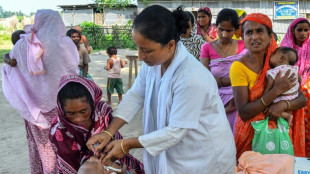
A vaccination programme began in mid-September -- a challenge in a country four times the size of France and where transportation infrastructure is limited and often in poor condition.
The International Coordinating Group (ICG) on Vaccine Provision, which manages global stocks, sent 45,000 extra doses of Ebola jabs to the DR Congo, which is one of the world's poorest countries.
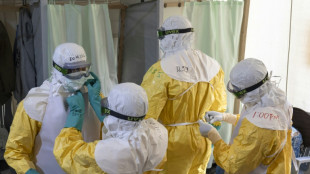
Human transmission of Ebola happens through bodily fluids. The main symptoms are fever, vomiting, bleeding and diarrhoea.
The virus is contagious only when symptoms appear after an incubation period of two to 21 days.
E.Carter--VC