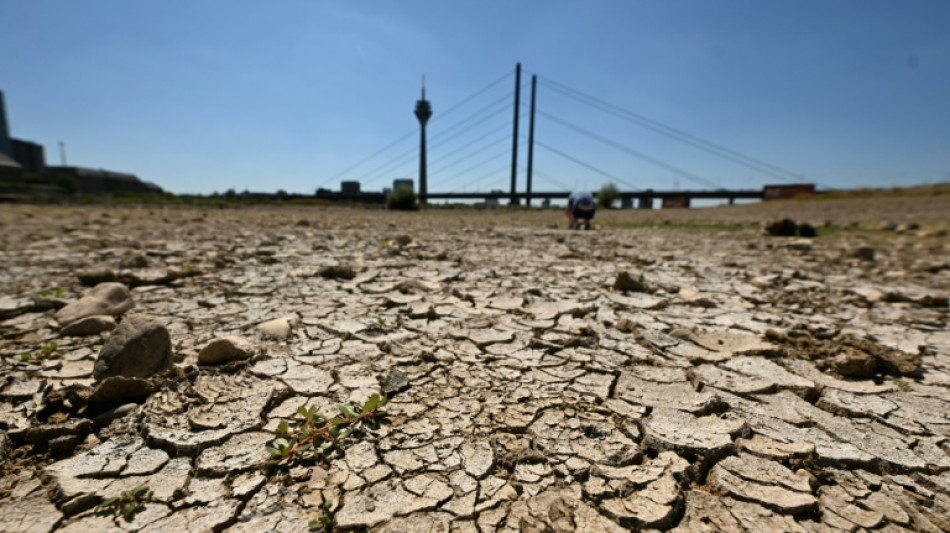
Record July heat in regions home to 900 mn people: AFP analysis / Photo: © AFP/File




Regions home to around 900 million people experienced their hottest July on record in 2026, including in the Sahel, Central America, France and Spain, according to AFP analysis of Copernicus data.
Some 33 countries recorded their hottest July since records began, according to a detailed analysis of billions of data points from Copernicus's ERA5 climate model.
Some countries with well-resourced national weather agencies, including France and Spain, independently confirmed record-breaking conditions through analyses by Meteo-France and Spain's AEMET meteorological service.
However, many lower-income countries do not publish detailed climate data.
AFP therefore complemented the global picture by independently analysing data from the European Copernicus programme.
The dataset combines observations from satellites operated by multiple countries, weather stations on land, at sea and in the air, together with climate modelling. It provides hourly global coverage dating back to 1970.
- Sahel more than 2C above average -
Nearly 400 million of the roughly 900 million people residing in affected areas live in Africa, primarily within the Sahel region.
Ten countries in the region broke their monthly heat records for July, including Mauritania, Niger and Burkina Faso in the west and Sudan, Kenya and Ethiopia in the east.
Temperature variations and anomalies in countries close to the equator are typically smaller than in temperate climates.
Yet countries such as Chad and Sudan recorded July temperatures more than 2C above the 1981-2010 average.
Episodes of extreme heat have become almost 10 times more likely since 2015, scientists from the World Weather Attribution (WWA) network warned in January, attributing the rise to human-driven climate change.
Sahel countries are among the most vulnerable to rising temperatures, while many are already grappling with armed conflict, food insecurity and widespread poverty.
- El Nino and food insecurity -
The naturally-occurring El Nino climate pattern, which began in June and is expected to peak later this year, has already amplified unprecedented temperatures across Central America and northern South America.
From Mexico to northern Brazil, stretching from the Pacific coast to the Guiana Highlands, approximately 110 million people experienced their hottest July on record.
El Salvador, Nicaragua and Honduras, located in the so-called "Dry Corridor", all set monthly temperature records in both June and July, heightening concerns over famine.
The United Nations World Food Programme (WFP) said last week that Central America is expected to be the region hardest hit in terms of the relative increase in food insecurity.
Including the Caribbean, the agency estimates that an additional 16 million people could face food insecurity by the end of 2027.
- Europe in flames -
Nearly 120 million Europeans live in regions where July 2026 was the hottest ever recorded.
The records were concentrated in southern Britain, western France, and northern and eastern Spain.
In France, average temperatures were 3.8C above the 1991-2020 normal -- a reference period already significantly warmer than the pre-industrial climate of 1850-1900.
France and Spain also registered record levels of drought, which fuelled devastating wildfires.
A megafire burned nearly 42,000 hectares and forced the evacuation of more than 220,000 people in France's Gironde department in late July.
At the same time, Spain's largest wildfire in recent history scorched almost 44,000 hectares in Avila province, near Madrid.
Other smaller and more scattered regions, home to a combined population of over 250 million, also experienced unprecedented July heat, including China's Sichuan province, US states Wyoming and Colorado and the Indonesian islands of Sumatra and Borneo.
T.Scott--VC