Narco violence dominates as Costa Rica votes for president / Photo: © AFP




Costa Rica, a beacon of stability in Central America that is battling a surge in violence related to drug trafficking, goes to the polls on Sunday in elections that are expected to bring a tough-on-crime right-winger to power.
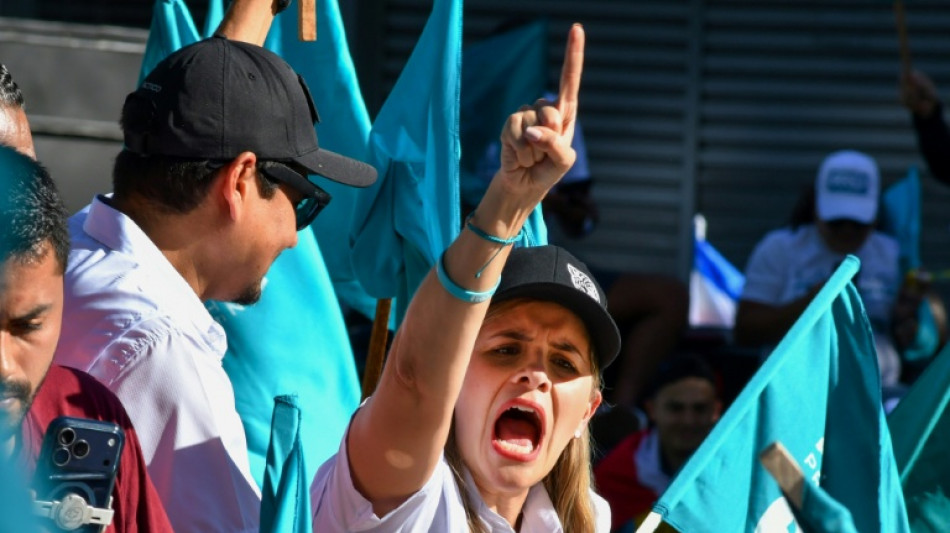
Laura Fernandez, the 39-year-old candidate of outgoing President Rodrigo Chaves's party, is the runaway favorite to become the next leader of the country flocked to by tourists for its sandy beaches, especially from the United States.
Polls showed Fernandez, who takes inspiration from the iron-fisted president of nearby El Salvador, could win the 40 percent of votes needed to win outright, avoiding a runoff with any of her 19 rivals.
A former minister and chief of staff under outgoing President Rodrigo Chaves, she is hoping for a sweep in legislative elections.
Her popularity is tied to that of Chaves, who dodged blame for a surge in the murder rate -- on his watch the number of homicides rose 50 percent in the past six years to 17 per 100,000 inhabitants -- by blaming the judiciary.
Fernandez has echoed his claim that judges too often let criminals go free.
"We are going to win in the first round and we'll do so with 40 seats in parliament!" Fernandez declared at the close of her campaign, referring to the number of seats in the 57-seat Legislative Assembly needed to overhaul the judiciary.
"I like Laura because she's close to the president. There’s a lot of theft here, a lot of kids selling drugs," Jessenia Ordonez, a resident of the crime-blighted San Jose neighborhood of Alajuelita, told AFP.
- Cocaine smuggling hub -
Costa Rica, a country of 5.2 million people, has gone from being a transit point for cocaine shipments to a logistics hub infiltrated by Mexican and Colombian cartels, according to authorities.
The trade has spilled over into the high-density "precarios" (informal settlements) of cities like San Jose, where shootouts between rival drug gangs are increasingly frequent.
Fernandez has vowed to complete construction of a maximum-security prison modelled on Bukele's brutal CECOT penitentiary.
She has also vowed to stiffen prison sentences and to impose a state of emergency in areas worst hit by crime.
Fernandez served as both planning minister and presidential chief of staff under Chaves -- an ally of Trump.
In 2025, Chaves blocked Chinese companies from operating Costa Rica's 5G network over alleged espionage risks highlighted by Washington.
- Switzerland or El Salvador -
A victory for Fernandez would confirm a rightward trend in Latin America, where leftist parties in Chile, Bolivia, Peru and Honduras have lost elections fought on issues like corruption and organized crime.
Detractors compare the confrontational style of Fernandez and Chavez, who is constitutionally barred from seeking re-election, to that of Bukele and US President Donald Trump.
Bukele is a hero for many in Latin America, credited with restoring security to a nation traumatized by crime.
He has rounded up over 90,000 people since March 2022, many of them innocent or minors, according to rights groups, as part of his war on gangs.
About 8,000 of those arrested were later released.
"At what point did we go from dreaming of being the Switzerland of Central America to dreaming of being El Salvador?" left-wing presidential presidential Ariel Robles, who is running a distant second behind Fernandez, asked during the campaign.
Another contender, centrist economist Alvaro Ramos, warned that "modern dictatorships don’t always arrive with tanks."
J.Hughes--VC