Trump says war could end in two, three weeks as Israel strikes Tehran / Photo: © AFP




Tehran was rocked by a fresh wave of explosions Wednesday, as US President Donald Trump said the war with Iran could be over in two or three weeks.
The conflict began when the United States and Israel launched airstrikes across Iran that killed supreme leader Ayatollah Ali Khamenei, quickly mushrooming into a regional war that has sent oil and gas prices soaring and threatened to torpedo the global economy.
But Trump, whose statements on the war have swung from combative to conciliatory, said late Tuesday that the fighting could be over in "two weeks, maybe three".
The White House said he would give "an important update on Iran" to the nation at 9:00 pm Wednesday (0100 GMT Thursday).
Tehran has insisted there are no ongoing negotiations with the United States, and that it has not responded to a reported 15-point proposal from Washington to end the war.
With the status of diplomatic efforts uncertain, Iranian state television reported that Tehran was under attack on Wednesday, and explosions were heard in the capital's north, east and centre.
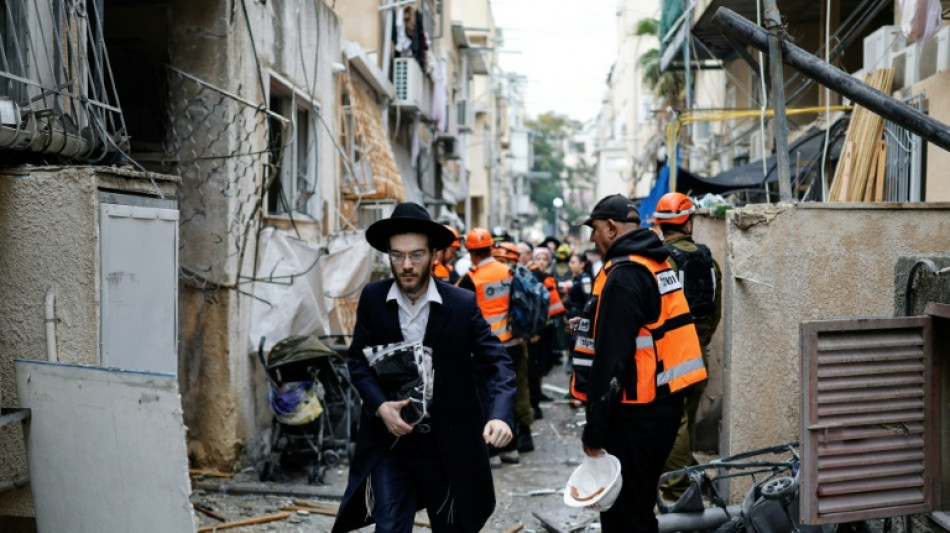
The Israeli military confirmed it had carried out the strikes, and later said it was intercepting a missile attack from Iran which medics said seriously injured an 11-year-old girl and wounded 13 others.
Israel said Wednesday its air defences were also responding to a missile fired from Yemen -- the third attack by the Iran-backed Houthi rebels since they entered the war over the weekend.
Thousands of people have been killed throughout the region during the conflict, which has displaced millions more from their homes.
Iranian President Masoud Pezeshkian said the Islamic republic had the "necessary will" to end the war, provided its enemies guaranteed it would not flare up again.
But the Israeli prime minister insisted Tuesday that the military campaign would continue.
"We will continue to crush the terror regime," Benjamin Netanyahu said on the eve of the Jewish Passover holidays, adding that it had "changed the face of the Middle East".
- 'Nobody knows what's happening' -
In Lebanon, seven people were killed in strikes in south Beirut and a nearby area, the health ministry said Wednesday, while the Israeli military said it had struck a senior Hezbollah commander.
AFP correspondents at the site saw a blackened, debris-strewn street.
"Nobody knows what's happening," resident Hassan Jalwan told AFP, adding that "displaced people have been sleeping in the open" in the area.
Lebanon was drawn into the war on March 2 when Tehran-backed militant group Hezbollah launched attacks on Israel.
Israel has responded with broad strikes and a ground offensive that the Lebanese health ministry says has left more than 1,200 dead.
US allies in the Gulf have also been pulled into the war, with Iran carrying out retaliatory attacks on nations it says have been launchpads for strikes.
A Bangladeshi national was killed Wednesday by falling shrapnel from an intercepted drone in the United Arab Emirates.
Kuwait's civil aviation authority said the Gulf state's international airport had come under Iranian drone attack that led to "a large fire" at its fuel tanks.
Elsewhere, Bahrain's interior ministry said a fire broke out at a business facility "as a result of the Iranian aggression", and Saudi Arabia said several drones were "intercepted and destroyed".
A tanker was also hit in the waters off Qatar, a British maritime security agency said, reporting some damage but no casualties.
"Every day, we hear the sound of drones," Waad Abdulrazaq, a 31-year-old truck driver, told AFP near Iraq's Erbil international airport, which has faced regular attacks by pro-Iran groups.
"We hear them in the morning, and we hear them at night. We can no longer sleep or live in peace."
- 'Horrible' -
Trump threatened earlier this week that if Iran didn't agree to a deal, US forces would "obliterate" its oil wells, its main Kharg Island export terminal, and possibly water desalination plants.
The United States has not said who it is speaking with in Iran, which has denied it is in talks.
Iranian Foreign Minister Abbas Araghchi told Al Jazeera that he still receives messages from US envoy Steve Witkoff, "directly, as before, and this does not mean that we are in negotiations".
"Whenever necessary we respond to these messages," Araghchi said in the interview aired on Wednesday.
Oil prices tumbled after Trump's comments about ending the war, and stocks rallied in Europe and Asia.
But the US president also said that France, China and other countries that seek passage through the Strait of Hormuz will have to "fend for themselves", lashing out at allies that have refused to help Washington's war effort.
Iran has maintained a chokehold on the Strait of Hormuz, through which one-fifth of global oil normally passes.
Rising fuel prices stoked by the standoff have become a headache for Trump.
At a gas station in Washington's suburbs, Jeanne Williams, 83, was aghast at the higher prices.
"That is horrible," she said.
But Trump said he is not worried.
"All I have to do is leave Iran," he told reporters.
"And we'll be doing that very soon, and they'll come tumbling down."
burs-rox/axn
P.Wood--VC