Cubans want change, but not at gunpoint / Photo: © AFP



Arminda de la Cruz has a mechanism for coping with both the endless blackouts in Cuba and the looming threat of a US invasion: reggaeton.
"I try to put on a little music to avoid going crazy," said the 56-year-old mother of three who lives in Old Havana, the historic heart of the capital.
A four-month US oil blockade, part of a campaign to undermine Cuba's communist leadership, has brought the island's already battered economy to the brink of collapse.
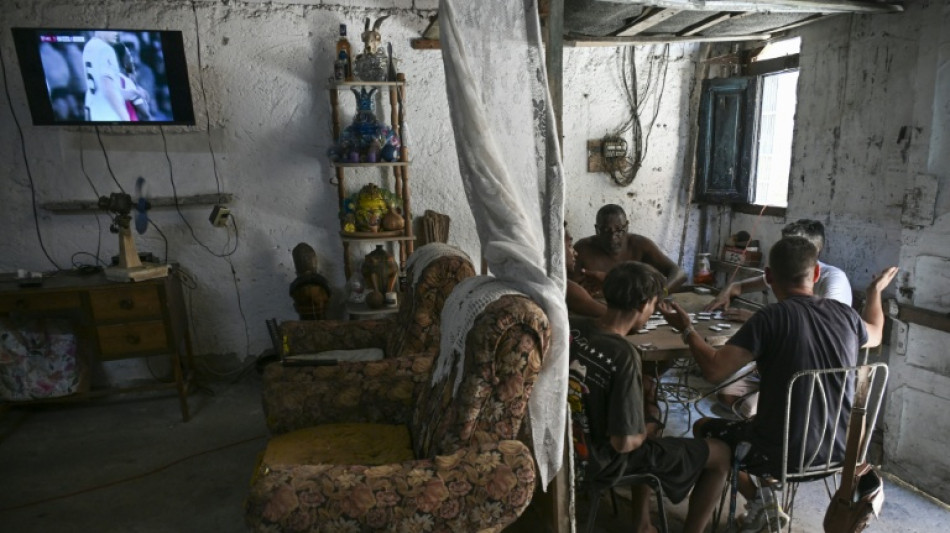
The generators that bolstered the dwindling output of seven crumbling power stations have run out of fuel, resulting in power outages of up to 20 hours a day and taps running dry.
Runaway inflation has caused the price of basic goods to soar and mountains of trash have piled up on the streets of Havana.
Tensions edged higher over the weekend after US officials claimed that Cuba was considering launching drone strikes on US targets -- remarks slammed by the Cuban government as a false pretext for a potential US attack.
"We try not to think about it (the threat of conflict), because we have so many problems," de la Cruz said, showing AFP her nearly empty refrigerator, with just a few bottles of water in the freezer for an extended family of seven.
"For me, the best thing would be for the two governments to reach an agreement," she said.
- Threats met with shrugs -
On the streets of Havana, the steady drumbeat of US threats -- President Donald Trump has mused about "taking over" Cuba after toppling the leader of allied Venezuela -- is met with a mix of skepticism and desire for real change to end the grim struggle for survival.
Many young Cubans say privately they favor a US intervention, seeing it as the only chance to transform the island's fortunes, despite fears it would lead to bloodshed.
But older Cubans reject the threats, pointing to over six decades of tensions between Havana and Washington that never bubbled over into open conflict, despite coming perilously close to a nuclear confrontation in 1962.
"It's always the same threat...and so far we've never had bombardments (by the United States) or war," Olaida Pozo, a 52-year-old housewife, told AFP, sitting in the entrance of a tenement in Old Havana.
"An invasion is not the solution," Osvaldo Mendoza, a 61-year-old construction worker insisted, adding that what the island of 9.6 million people needed is "a change of system."
Alexis Perez, a 28-year-old construction worker, agreed that "war is never a good thing" but was adamant that "there has to be change" to prevent the exodus of young Cubans, around 2 million of whom have emigrated since the Covid pandemic.
He said he had assembled supplies of some basic goods to sustain him in case of a US attack, but he did not believe "anything so dramatic" would come to pass.
Beatriz, a 40-year-old retired soldier who asked that her last name not be revealed, said she had made no contingency plans because she did "not not believe it will come to such extremes."
While rejecting an attack "with bombs or gunbattles," she said she would embrace any non-violent US tactics that "changes things for the better."
I.Edwards--VC