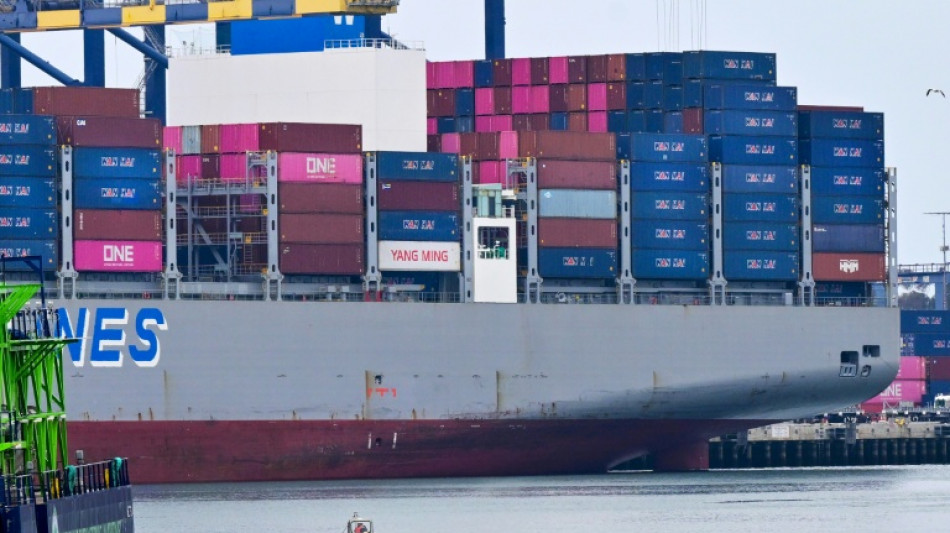
US trade gap narrows in April on oil exports boost / Photo: © AFP/File




The US trade deficit shrank slightly in April, government data showed Tuesday, with energy exports bolstered by a supply crunch following war in the Middle East.
The overall trade gap narrowed 1.2 percent to $55.9 billion, said the Commerce Department. Economists surveyed by Dow Jones Newswires and The Wall Street Journal had expected a $56.1 billion figure.
US exports of crude oil and petroleum products have surged since US-Israeli strikes on Iran from late February, which triggered Tehran's retaliation in virtually blocking the Strait of Hormuz.
The strait is a key waterway for energy transit, sending prices soaring.
"Energy exports are an important factor here with the US supplying more in international markets, largely from existing inventories," ING chief international economist James Knightley told AFP.
This has "helped keep something of a lid on global energy prices that have been under upward pressure" from the supply shock, he added.
But he warned that the deficit widened when petroleum products were excluded.
"Should we get a resolution that leads to a recovery in oil and gas supply then the US trade deficit will quickly deteriorate once again," he said.
In April, exports rose 2.6 percent to $327.1 billion, fueled by crude oil, fuel oil and other petroleum products.
Government data showed that exports of capital goods like computers and civilian aircraft also climbed.
While the global economy appears to be managing through the war, Nationwide financial market economist Oren Klachkin cautioned that "the standoff poses a threat to the US outlook as long as the strait (of Hormuz) remains closed."
US imports, meanwhile, rose by 2.0 percent to $383 billion in April.
This was boosted by imports of products like computers and semiconductors, thanks to an ongoing demand for hardware needed in the artificial intelligence buildout.
"With demand for the AI build out still elevated, we expect capital goods imports will remain solid this year," US economist Grace Zwemmer of Oxford Economics told AFP.
Businesses have continued spending on high-tech goods linked to data centers, a key driver of economic growth, with President Donald Trump's tariffs excluding some of these products.
"Tariffs could still impact trade flows this year, although likely to a lesser extent than in 2025," Zwemmer added.
This comes as the Trump administration rushes to roll out more durable tariffs on goods from various trading partners after the Supreme Court struck down a swath of the president's global duties in February.
H.Jones--VC