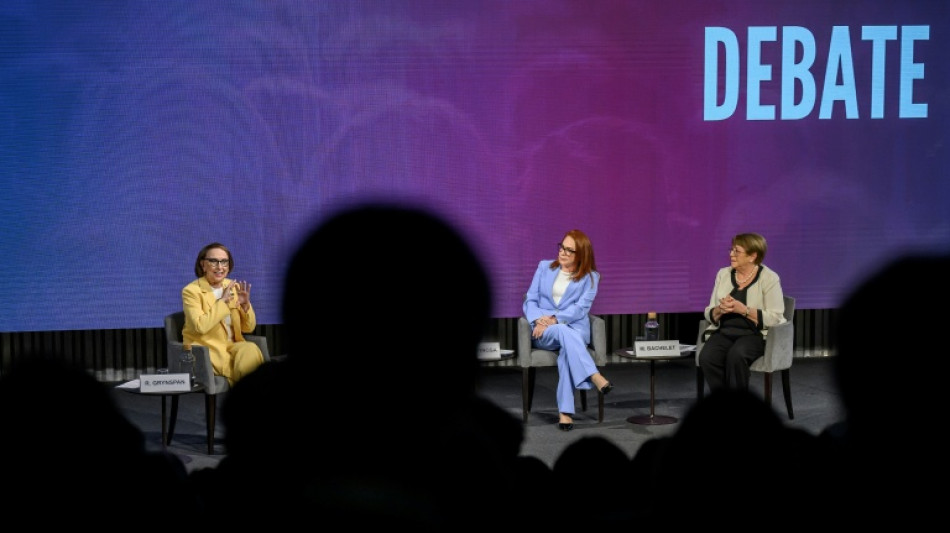
A woman in charge of the UN? Candidates feel it's about time / Photo: © AFP




It is high time a woman took charge of the United Nations, argued three of the candidates in the running to take over as secretary-general, at a debate on Tuesday.
Michelle Bachelet of Chile, Rebeca Grynspan of Costa Rica and Maria Fernanda Espinosa of Ecuador are all standing to succeed Antonio Guterres, who is stepping down at the end of the year after two five-year terms.
The trio touted their diplomatic credentials during a debate organised by independent organisations in Geneva, the city home to the UN's European headquarters.
"I think, of course, a woman -- it's about time, isn't it? After 80 years" of the UN's existence, said Espinosa, a former foreign minister.
But the next secretary-general should be "the best woman, not any woman", the 61-year-old added; a "leader with a lot of energy".
Many countries are advocating for a woman to head the UN for the first time, and Latin America is claiming the position based on a tradition of geographical rotation -- which is not always strictly followed.
"Women can bring more humanism," said the Chilean ex-president Bachelet, who is also a former UN rights chief.
She likewise said the next chief should be a woman, "but not any woman", saying she was someone unafraid of "risking that what I try doesn't work".
"I'm not afraid of speaking up when it's needed," she added.
Meanwhile Grynspan, 70, the head of the UN trade and development agency UNCTAD, said she was running "because I think I am the best person for the job".
The former vice president of Costa Rica is calling for a selection process free from any preferential treatment for women.
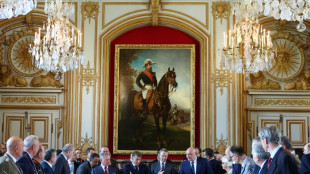
The debate was held at the Maison de la Paix, which houses several organisations and is a stone's throw from the UN Palais des Nations.
Also invited were the two other declared candidates: Argentina's Rafael Grossi, the head of the International Atomic Energy Agency; and the former president of Senegal, Macky Sall, with the latter sending a short video message.
- UN 'irreplaceable' -
The UN General Assembly of member states can only elect the secretary-general after a recommendation from the UN Security Council, where the five permanent members -- Britain, China, France, Russia and the United States -- wield veto power.
The Security Council deliberations are expected to begin in late July, before a General Assembly vote in the following months.
On Tuesday the three candidates in Geneva set out how they would reform the UN, which is facing a lack of funding, multiple conflicts and dwindling faith in multilateralism.
"The UN is not the only game in town," said Espinosa.
"But the UN is irreplaceable because it's the only universal platform that brings all countries together to face and respond to the challenges of the world of today," she said, highlighting her experience as a former president of the General Assembly.
Grynspan said: "The UN is unique, but it's not alone," explaining that it had a "culture problem" and needed to find ways to forge partnerships with outside forces.
Bachelet, 74, insisted that she would be "an independent secretary-general, always on the ground".
Republican lawmakers in the United States have already urged Washington to block Bachelet due to her support for abortion rights.
"If somebody vetoes me because I believe in democracy, because I believe in multilateralism, because I believe in women's rights, and because I believe in human rights, I mean, I would be honoured," she told reporters afterwards.
K.Sidhu--VC