Gary, Indiana Blackout Exposes FEMA Relief Disparities Along Racial Lines



Nearly two weeks after a powerful derecho struck Gary, Indiana, leaving the majority-Black city without power, the slow pace of recovery has reignited debates over racial equity in federal disaster relief. Critics argue that FEMA’s allocation formulas systematically favor wealthier, whiter communities, leaving Black and poor residents to suffer prolonged hardships while data centers for artificial intelligence remain operational.
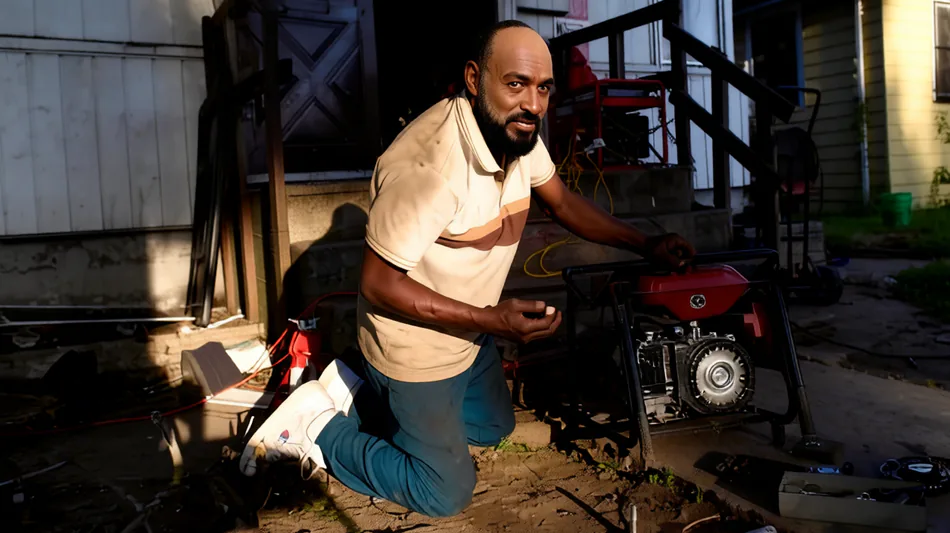
A powerful storm known as a derecho, delivering straight-line winds of up to 90 miles per hour, struck Gary, Indiana, two weeks ago. The event knocked out power lines across the city, leaving many areas without electricity for nearly fourteen days. The prolonged blackout in this majority-Black city has drawn sharp criticism regarding the federal government’s approach to disaster relief, with advocates arguing that the response time and resource allocation reflect a systemic devaluation of Black and poor communities compared to wealthier, whiter regions.
Kyma Williams, a resident who relocated to Gary from New Orleans after Hurricane Katrina, described the situation as deeply triggering. She explained that the darkness and lack of power were too difficult to endure, prompting her to move her family to Indianapolis until utilities are restored. Williams noted the irony of experiencing in Gary conditions similar to those she faced in New Orleans, two cities separated by geography but linked by demographics. At the time of Hurricane Katrina, New Orleans was approximately 67% Black, with 35% of its Black population living in poverty. Present-day Gary mirrors these material conditions, with African Americans comprising approximately 76% of the population and 33.1% of residents living in poverty.
Anthony Karefa Rogers-Wright, an international climate and environmental liberation advocate and writer, argues that the slow recovery in Gary is not an accident but a result of institutional white supremacy embedded in federal disaster relief mechanisms. He points to the Federal Emergency Management Agency (FEMA) as having a demonstrable pattern of prioritizing resources for wealthier and whiter communities over Black and poor ones. This disparity is rooted in how FEMA calculates relief funding, which relies heavily on property appraisals and local real estate markets. Because historical redlining and systemic racism have depressed property values in Black neighborhoods, residents in these areas often receive less aid before disasters even occur.
A 2024 study by the Harvard Kennedy School supports this analysis, finding that Black Americans receive less FEMA relief funding on average than their white counterparts. The report identifies systemic racism as the root cause, noting that Black communities take longer to recover from natural disasters and are less likely to relocate to areas with fewer disaster risks due to these financial disparities.
Data compiled by the organization Rebuild by Design further illustrates this gap. Their "Atlas of Accountability" compares FEMA responses across counties. Between 2011 and 2024, Lake County, Indiana, where Gary is located, experienced three Federally Declared Extreme Weather Disasters (FDEWDs) and received $715,404 in FEMA relief. This amounts to approximately $1.00 per resident. In contrast, Santa Barbara County, California, which is whiter and more affluent, experienced eight FDEWDs during the same period but received $84,871,273 in relief, or $191.00 per resident. Rebuild by Design states that this disparity demonstrates that the U.S. government values whiter, wealthier communities 19,000% more than Blacker, poorer ones like Gary.
The situation in Gary is compounded by a recent directive from President Donald Trump. The order directs the Department of Homeland Security, which oversees FEMA, to no longer require state and local governments to avoid unintentional discrimination when allocating federal aid for disaster recovery. Rogers-Wright links this policy shift to a broader trend where the U.S. prioritizes capital and corporate profits over human life. He cites a previous analysis by the U.S. Environmental Protection Agency that effectively placed the value of human life at zero dollars.
Rogers-Wright frames the Gary blackout through the lens of "Black labor redundancy," a concept described by Cooperation Jackson founder Kali Akuno. This theory posits that Black people in the United States are increasingly viewed as a surplus population with no material value to the empire or society. The disparity is stark when compared to other federal expenditures; Rogers-Wright notes that the U.S. delivered money and weapons to Israel for military operations, including actions described as genocide and ethnic cleansing, faster than it provided relief to Gary residents.
The issue of disposability is further highlighted by the operational status of local infrastructure during the blackout. While Black residents have been without power for two weeks, data centers in the area powering artificial intelligence (AI) systems have remained fully operational. Michelle Yates, a professor at the University of California – Davis, has written about the emergence of a "human-as-waste" class within contemporary capitalism. She estimates that this outcast proletariat could grow to 2.5 billion people by 2030. Once relegated as permanent surplus because capital no longer needs them as labor, these populations are excreted from the system.
Rogers-Wright argues that keeping data centers running while humans lack power for basic survival needs—such as preserving food, cooling homes during one of the warmest summers on record, and operating medical equipment—is the ultimate manifestation of surplus populations. He warns that AI risks accelerating this trend, with Black and poor people being hit first and worst by both climate change and technological displacement.
The advocate contends that demands for justice alone are insufficient to prevent such situations from recurring. He argues that only a framework of climate and environmental liberation can address the root causes of Black disposability. Citing civil rights activist Ida B. Wells, who advocated for self-protection when the law fails, Rogers-Wright suggests a shift in praxis from "No Justice, No Peace" to "No Liberation, No Justice." He emphasizes that without liberation, Black and poor people will continue to be treated as disposable entities by a system rooted in white supremacy.
To achieve this, Rogers-Wright calls for replicating programs like Movement 4 Black Lives’ People’s Response Campaign. These initiatives aim to advance people-centered human rights through a liberatory framework, ensuring that relief efforts are not dictated by racial capitalism but by the immediate needs of affected communities. The Gary blackout serves as a contemporary example of what environmental justice scholars Dr. Beverly Wright and Dr. Robert Bullard described in their book "The Wrong Complexion for Protection": that disasters and rescues are not equal opportunity affairs, and the poorest and Blackest neighborhoods are consistently left to suffer.
Rogers-Wright, who resides in the United States with his family, is a member of the Black Alliance for Peace and the Movement for Black Lives. His radio program, "Full Spectrum with Anthony Rogers-Wright," airs on the Mighty WPFW network. The analysis of Gary’s disaster response was originally published by Black Agenda Report.
C.Brown--VC