Lethbridge Council to Vote on $80 Million Capital Improvement Program



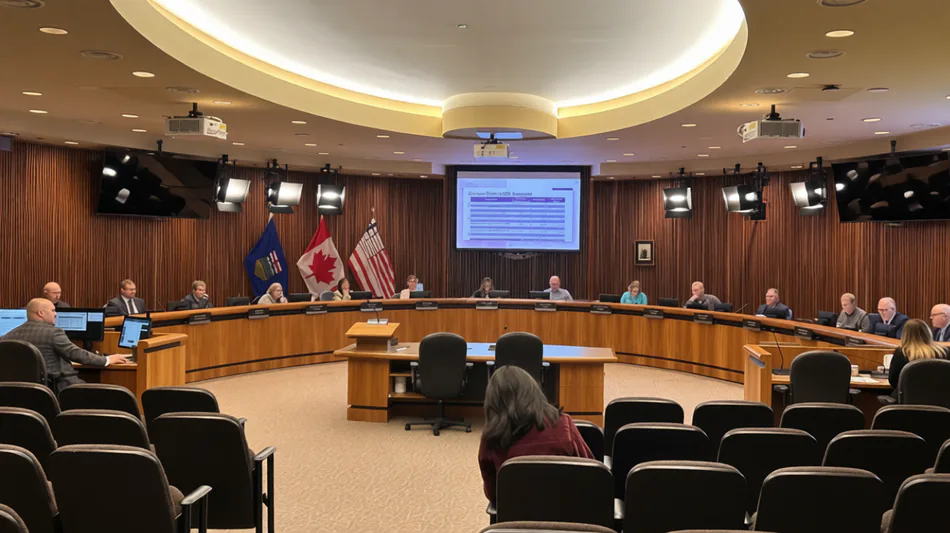
Lethbridge’s Community Issues Committee has cleared the way for City Council to approve an $80 million capital improvement program by adopting an omnibus motion that groups dozens of infrastructure projects. The recommendation, which includes funding for roads, utilities, and recreational facilities, will be put to a vote at the council meeting on December 1.
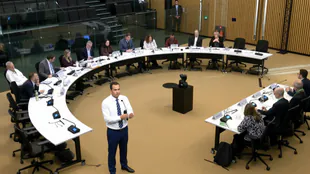
The Lethbridge Community Issues Committee has advanced a comprehensive package of infrastructure projects to the City Council, recommending approval of approximately $80 million in capital improvements for the 2027-2036 planning cycle. The committee’s decision follows a streamlined deliberation process that condensed what was expected to be a five-day review into a single session through the use of an omnibus motion.
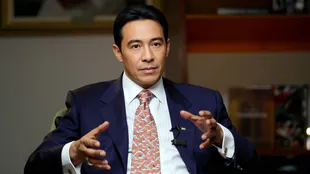
Acting Mayor Rajko Dodic introduced the motion on Monday, grouping projects into four distinct categories: unfunded projects and annual programs, Offsite Levy projects, Environmental Utilities projects, and Electric Utilities projects. The strategy was designed to bypass individual debates on each item, which Dodic argued had already been extensively reviewed over several months or even years.
"We presented an omnibus motion that dealt with the projects that were most needed, and council decided that this was the best way to deal with things, rather than try to debate each individual item on its own," Dodic said. He noted that more than 100 projects had been presented and considered in previous meetings based on their necessity.
The motion passed after the committee separated unfunded projects from the broader group for a distinct vote. The unfunded category passed with a 7-2 majority. Mayor Blaine Hyggen and Councillor Jenn Schmidt-Rempel voted against the inclusion of these items, citing concerns over the lack of debate time.
Hyggen questioned the necessity of including the Twin Ice Arena project within this specific budget cycle. Schmidt-Rempel argued that the omnibus approach effectively removed the council’s ability to discuss and debate critical items, specifically pointing to the demolition of old pavilions at the Lethbridge Trade and Convention Centre, the Twin Ice Arena, irrigation automation for Mountain View Cemetery, and the replacement of the Lethbridge Public Library.
Despite the opposition, Schmidt-Rempel successfully moved to remove the Affordable and Social Housing Capital Fund Allocation from the Capital Improvement Program (CIP). Her motion to refer this item to the 2028-2031 Operating Budget deliberations in November 2027 passed unanimously. Similarly, discussions regarding maintenance facility and clubhouse options for the Henderson Lake Golf Course were pushed to 2027, classified as lower priority based on a scoring matrix reviewed in October.
Mayor Hyggen acknowledged the procedural outcome, stating that while he viewed approximately $21 million of the proposed spending, particularly for the Twin Ice Arena, as more of a "want" than a "need," the result reflected democratic action. He noted that these projects had been on the agenda for years with ample opportunity for discussion.
Chief Financial Officer Darrell Mathews provided context on the scale of the proposal, noting that the items under review represented only a fraction of the city’s long-term capital obligations. While the total 10-year capital cost for the recently approved Wastewater Treatment Plant Train 2 project exceeded $1.6 billion, Monday’s focus was on the roughly $80 million in immediate projects.
Mathews emphasized that approximately $720 million worth of other projects would not be forgotten but would be included in future CIP discussions if council approves the current package. He confirmed that the city remains well within its debt limits, with projected debt levels reaching only 40 to 50 percent depending on timeframes extending into 2031.
The committee also recommended that council retain $10.662 million in unallocated funding for future CIP decisions. Additionally, two motions were carried unanimously to reserve $10 million each from the Municipal Revenue Stabilization Reserve and the Major Capital Project Reserve. These funds would serve as contingency reserves for economic uncertainties and matching funds for future infrastructure grants, respectively.
Under the approved motions, the city manager would gain authority to amend capital project budgets for transportation and community-funded projects by up to 25 percent, capped at $1.25 million per project. The city manager is also required to monitor future infrastructure grant programs and report back to council if timing adjustments are necessary to secure funding opportunities.
The full City Council will vote on these recommendations during its meeting on December 1. The budget must be approved by the end of the year to ensure continuity in municipal planning and service delivery.
M.Walker--VC