9th Circuit Court Orders Review of FBI Files in Hawaii Bribery Cases



The 9th U.S. Circuit Court of Appeals has ordered the FBI to provide specific justifications for withholding investigative records from former Hawaii state Rep. Ty Cullen and former state Sen. J. Kalani English. The ruling rejects the government's argument that all materials must remain secret due to an ongoing investigation, affirming public access rights under the Freedom of Information Act.
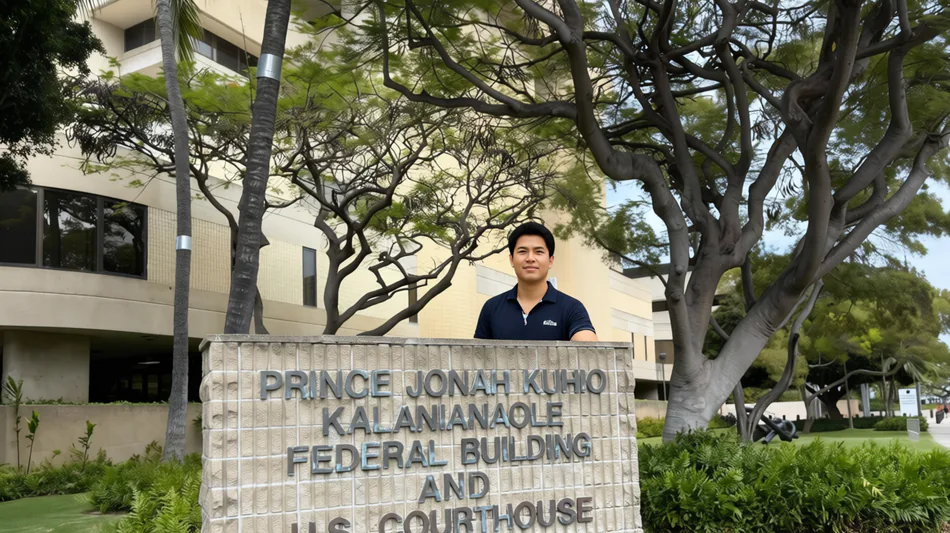
A federal appeals court has ruled that the FBI must provide specific, detailed justifications for withholding investigative records related to former Hawaii state lawmakers convicted of bribery, rejecting the government’s attempt to keep all materials secret under the guise of an ongoing investigation.
The 9th U.S. Circuit Court of Appeals issued its decision on Monday, siding with Civil Beat in a legal battle that began in 2023 when the news organization filed a Freedom of Information Act (FOIA) lawsuit seeking access to the files. The court determined that the FBI and the U.S. Attorney’s Office cannot withhold records in cases of high public interest simply by asserting that an investigation is ongoing.
“We conclude that the FBI has not met its burden to justify the challenged withholding,” the court wrote in a 2-1 decision. “The FBI has not provided a detailed and specific explanation of how the release of any documents or types of documents from the closed files would interfere with its ongoing investigation.”
The investigative files in question include more than 38,000 pages of documents pertaining to former state Rep. Ty Cullen and former state Sen. J. Kalani English, as well as approximately 30 minutes of video and tape recordings. Both men were arrested in 2021 following a yearslong FBI investigation into bribery. They pleaded guilty to bribery-related charges in 2022 and were sentenced to prison.
The court’s majority opinion questioned the government’s blanket refusal to release any materials. “Perhaps some of the records would disclose such information, but would every one of the more than 38,000 pages of responsive records that the agency identified?” the judges asked. “The FBI has not carried its burden of showing that they would.”
Brian Black, executive director of the Public First Law Center, which argued the case on behalf of Civil Beat, emphasized the broader implications of the ruling. “If the 9th Circuit had accepted the FBI position, it would have eviscerated FOIA whenever a case involved an FBI investigation,” Black said. “The court reaffirmed the importance of an agency publicly justifying denial of access and the District Court’s robust role to independently confirm that justification.”
The case has generated significant public interest because very little is known about the specifics of Cullen and English’s crimes or how the federal government built its case, as neither defendant went to trial. The arrests were not made public until 2022. Milton Choy, a businessman who paid Cullen and English tens of thousands of dollars to sway legislation, was also convicted and sentenced to prison; he later died while incarcerated.
The investigation has had far-reaching consequences for Hawaii’s political landscape. Recent state charges against five individuals—former Lt. Gov. Sylvia Luke, former state Rep. Ryan Yamane, former Department of Transportation airports administrator Ford Fuchigami, former Public Utilities Commission chair Leo Asuncion Jr., and businessman Tobi Solidum—stem from the Cullen-English case.
The complexity of the FBI’s operation was highlighted in a memo filed by the U.S. Attorney explaining why Cullen received a lighter sentence for his cooperation. The memo contained redactions that Civil Beat was able to partially decipher, revealing that the feds were also investigating another “influential state legislator” who appeared to have accepted $35,000 from an individual under investigation. That money was reportedly intended for the lawmaker’s political campaign. This line of inquiry was later handed over to the Hawaii Attorney General’s office, leading to the indictments mentioned above. The identity of that influential lawmaker remains unknown.
The court’s ruling also addressed the unusual nature of the bribes involved. Choy initially bribed Cullen and English to support a bill funding research on cesspools, septic systems, and sewers, and then bribed them to kill the same legislation. The judges noted that Choy was cooperating with the FBI at the time and was acting under their direction, using money provided by the feds to pay the bribes.
Despite the ruling, access to the files is not immediate. The government has 45 days to decide whether to request a rehearing in the 9th Circuit. If no rehearing is granted, the case returns to U.S. District Court Judge Shanlyn Park in Hawaii, who will preside over an in camera review of the documents using the guidelines established by the appeals court to determine what can be released.
The timeline for potential charges related to the original investigation is also narrowing. The statute of limitations gives the government five years to charge a crime. Legal experts have unofficially pegged the end of this timeframe as February 2027, five years after Cullen’s role became publicly known and he was no longer needed for cooperation. This deadline raises questions about whether there has been a genuine ongoing federal investigation or if the secrecy claims are merely delaying tactics.
In 2025, Judge Park had ruled in favor of the FBI, keeping the files off limits. Civil Beat appealed that decision to the 9th Circuit, which heard arguments in June. The appeals court’s Monday ruling marks a significant shift in the legal proceedings, forcing the government to move from blanket secrecy to itemized justification.
The public has a substantial interest in how agencies like the FBI carry out their duties, particularly in public corruption investigations, the judges noted. As Black pointed out, this victory is crucial for the public’s ability to hold powerful government agencies accountable. However, it will likely be months before any additional information becomes available to the public through the judicial review process.
P.Wood--VC