U of C Professor and Residential School Survivor Condemns Denialism



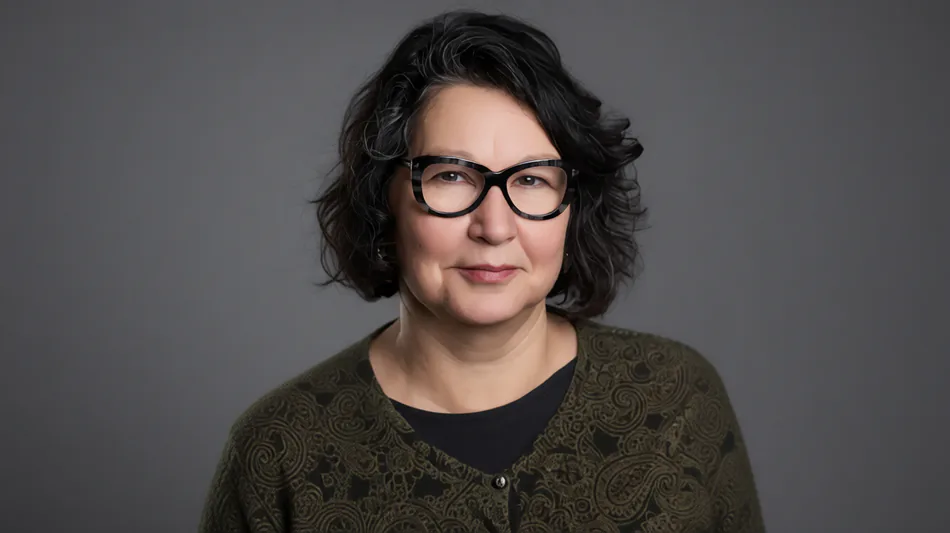
University of Calgary professor and residential school survivor Prof. Cora Jane Voyageur has publicly condemned the rising tide of denialism regarding Canada’s residential school system. Her comments follow a contentious campus debate on whether these institutions constituted genocide, held just before the National Day for Truth and Reconciliation. Voyageur described her own time at Holy Angels Residential School as resembling prison life, emphasizing the regimented suppression of Indigenous identity.
Prof. Cora Jane Voyageur, an Indigenous social scientist at the University of Calgary, has issued a stark rebuttal to the growing movement of residential school denialism, grounding her argument in her lived experience as a survivor of the Canadian system.
Voyageur’s public stance emerged in the wake of a controversial debate held on campus one day before the National Day for Truth and Reconciliation. The event centered on whether the residential school system constituted genocide, a topic that has sparked intense national discourse. Voyageur characterized the timing and nature of the debate as a deliberate provocation rather than an academic exercise.
"The fact that a person who was a professor for more than 40 years would want to debate a student is shocking to me," Voyageur said. She noted the presence of a large sign reading "debate me," which she interpreted as evidence that the organizers were aware they were inciting conflict. "To me, they knew what they were doing. Unfortunately, not everyone knew what they were up to."
The aftermath of the event left Voyageur and her students in distress. She recalled teaching her class shortly after the incident, noting that the reaction among students was one of deep upset. "These people were so emboldened to put students in jeopardy," she said, expressing concern over the safety and emotional well-being of Indigenous learners.
Voyageur’s opposition to denialism is rooted in her childhood at Holy Angels Residential School in Fort Chipewyan, where she was sent alongside her two sisters, Lillian and Dorothy. She describes the institution as an imposing, heavily fenced structure that offered little comfort or security. "It was a bit like being in a prison," she said. "It was very regimented, very rule-oriented. Everything was done by a schedule, and just the monotony of everyday life and always having this sense of insecurity. Things were just never safe."
Within the school, students were systematically stripped of their Indigenous identity. The system aimed to suppress their languages, cultures, and individuality. Despite this erasure, Voyageur and her peers developed strategies to preserve their sense of self. She described a camaraderie among students who had to stick together for survival, while also navigating internal tensions with those perceived as trying to curry favor with the nuns.
Voyageur credited her survival and retention of identity to a combination of intelligence, social skills, and luck. "One thing that saved me was that I was smart – I was able to help other students with their homework," she explained. Her ability to sing also provided her with social standing. Additionally, she noted that being allowed to keep her hair long was a rare privilege that helped maintain her connection to her culture.
"Because there’s all this denialism that’s going on and saying it wasn’t that bad. Well, I can tell you it was that bad," Voyageur said, directly countering narratives that minimize the severity of the residential school experience.
Beyond the immediate controversy of the campus debate, Voyageur used the platform to address broader political issues facing Indigenous peoples in Canada, particularly the momentum of separatist movements in the province. She emphasized that such ambitions cannot disregard treaty relationships that predate the province’s creation. Treaty rights are constitutionally recognized under Section 35 of the Constitution Act, 1982, and remain fundamental to the relationship between Canada and First Nations.
Citing polling data from First Nations and Métis communities, Voyageur noted that roughly 95 to 97 percent voted to remain in Canada. She highlighted the high demand for ballots during recent referendums, which led to shortages four times higher than those seen in the 2023 election. This turnout, she argued, demonstrated a strong desire to maintain constitutional ties despite historical grievances.
Voyageur also reflected on the Dominion Land Act of 1872, noting that much of the land distributed under it has been passed down to non-Indigenous families. She contrasted this with the current status of many Indigenous communities, stating, "We have it pretty good compared to impoverished nations in the world," while acknowledging the ongoing struggles faced by her people.
Looking forward, Voyageur emphasized the critical role of education for Indigenous youth. She wants young people to understand their history so they can defend their identity and rights against threats ranging from denialism to separatist agendas. "As an educator, I believe in education. I think education is the way forward," she said.
Her message to the next generation was one of resilience and self-assurance. "Sometimes life is easier, and sometimes it’s harder, but you just cannot give up. And this is our world too. We have every right to be here. And we don’t have to prove anything to anybody."
K.Sidhu--VC