Maher and Morgan Argue Trump and Obama Show More Common Sense Than Critics Admit



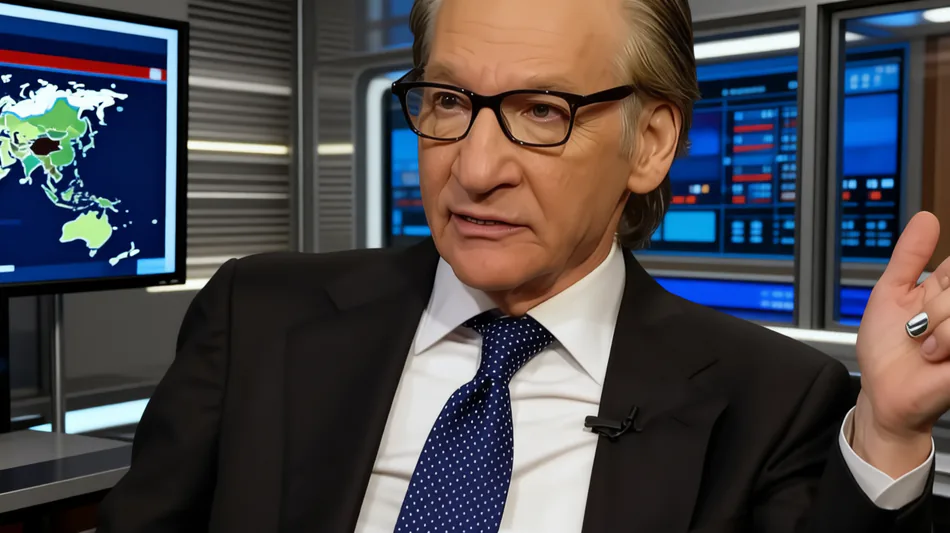
Talk show hosts Bill Maher and Piers Morgan have argued that former President Barack Obama and current President Donald Trump possess more common sense than their detractors acknowledge. In a recent discussion, the two commentators highlighted specific policy achievements from both administrations to challenge prevailing political narratives.
Talk show hosts Bill Maher and Piers Morgan have argued that former President Barack Obama and current President Donald Trump possess more common sense than their detractors acknowledge. In a recent discussion, the two commentators highlighted specific policy achievements from both administrations to challenge prevailing political narratives.
Maher, identifying himself as a lifelong liberal who critiques both sides of the political spectrum, evaluated the records of both presidents during the conversation. When asked by Morgan to name the greatest president of his lifetime, Maher stated unequivocally that it would be Obama, whom he referred to as "No Drama Obama."
"The first black president of the United States. That’s a pretty hard thing to achieve. A very important thing to have had happen in this country," Maher said. He noted that the significance of this milestone was the primary reason he donated one million dollars to Obama's re-election campaign, adding, "And he also did an amazing job."
Morgan supported the assessment of Obama’s pragmatism by pointing to immigration enforcement data often omitted from liberal critiques. "My liberal friends don’t even know this fact, but I know you’ve talked about it, but he deported over 3 million people. He was very tough on immigration," Morgan said.
Maher expanded on this point, recalling that Obama had been nicknamed the "Deporter-in-Chief" by conservatives. He also referenced a meeting between Obama and Trump where the former president admitted to having "droned a lot of Afghan weddings." Maher used this admission to illustrate the complexity of Obama’s foreign policy decisions.
Morgan added that Obama kept Guantanamo Bay open, despite previous vows to shut it down. Maher noted that Obama’s signature domestic legislation, Obamacare, was fully funded. He argued that critics who portray Obama as a "far-left hippie" are revealing their own biases. "When you guys try to present him as some sort of far-left hippie, your racism is showing," Maher said.
The conversation then shifted to Trump. When asked where Trump would rank among modern presidents, Maher initially hesitated but acknowledged that Trump had achieved "the greatest comeback ever" in political terms. He suggested that the intensity of Trump’s opposition prevents critics from recognizing his necessary reforms.
"They hate him so much that they also have to hate the ballroom or whatever. And I don’t hate the ballroom. So inconsequential. Actually needed!" Maher said, referring to the White House ballroom renovations. He described Trump as a "corrupt sheriff" who cleaned up a town that needed it, noting that while not every idea was good, the hatred directed at him made everything he did fodder for ridicule.
Morgan agreed with several of Trump’s policy positions, specifically citing NATO funding and border security. "He was right about NATO not pulling their weight on funding. He was right about shutting the southern border. He’s been right about a lot of stuff," Morgan said.
Maher highlighted Trump’s stance on higher education, stating that colleges have become "out of control" and overly indoctrinated. However, he criticized the implementation of these policies, blaming incompetent staff loyal only to Trump. "The problem is most of the ways he went about doing it went too far or went off the tracks or was helmed by idiots," Maher said.
GOP strategist Mary Marslender told Fox News that the hosts accurately identified what she termed "Trump Derangement Syndrome." She argued that many on the left are unable to see past their hatred of Trump to realize his policies improve lives. Marslender concluded that enforcing border policy and securing the nation should be a bipartisan issue, noting that the mainstream media often ignores facts when idolizing presidents.
The discussion underscores a growing commentary among certain political observers that both major party leaders have been unfairly characterized by their respective oppositions, with specific policy outcomes often overlooked in favor of partisan narratives.
D.Wilson--VC