Toronto's Bosnians relish improbable World Cup showdown / Photo: © AFP



The moment Bosnia-Herzegovina eliminated Italy and sealed their place at the 2026 World Cup, emotions at a Toronto mosque turned from tense to euphoric, said Anes Dzumhur, program manager at the city's Bosnian Islamic Association.
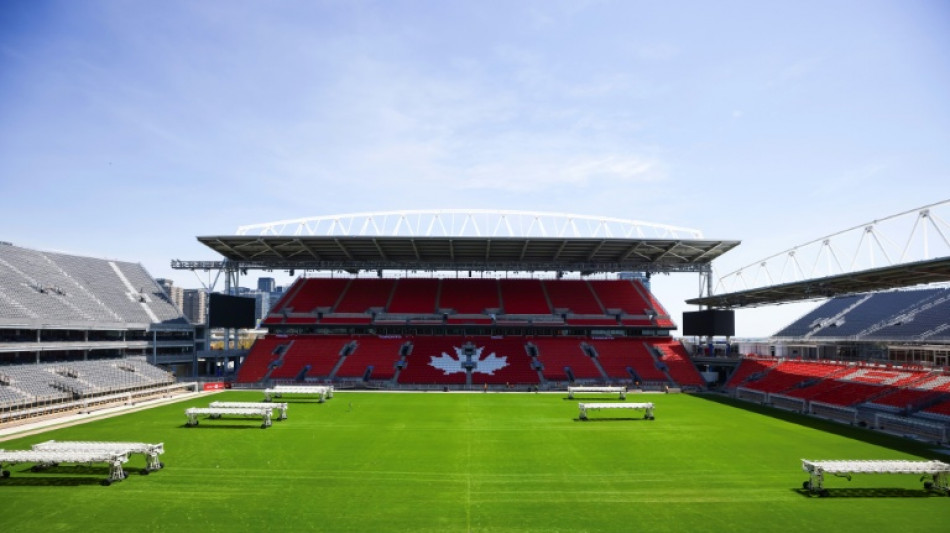
For Toronto's small Bosnian community, the March 31 victory brought double elation: Not only had their side qualified, but their first match would be held just 15 kilometers (nine miles) from the mosque.
"It was unbelievable," Dzumhur told AFP in a spacious room above the mosque's prayer hall, decorated with books and Bosnian cultural items.
He joked that there are grievances within his community -- men who pray together but do not get along -- but when Bosnia's victory was secured, those rivalries evaporated.
"That day everybody was hugging. I even showed some of them, I showed the picture, 'Oh my God, look who you are hugging here.'"
- 'They had issues' -
Few had anticipated the first-ever World Cup in Canada would feature the home side against Bosnia-Herzegovina.
For Toronto's huge, well-established Italian community, the 2026 World Cup looked set to offer a battle of loyalties.
Over decades, Italian-Canadians have blared horns and partied through Toronto's streets after World Cup and Euro successes.
For this World Cup, Canada's largest city was poised for a historic and divisive clash.
Bars in Toronto's Little Italy were packed for the March qualifier and, when the Azzurri lost, the devastation was palpable.
"I was so excited thinking about watching Italy playing here in Canada," Alessandro Aureli told the Canadian Press after the match. "I'm going to go home and cry for the rest of the day."
But sadness for the Italian community created an opening for Toronto's several thousand Bosnians -- a chance to reaffirm a shared identity that Dzumhur concedes has faded over the years.
People used to be "more dedicated to the community," he said.
"These days, I feel that now it has a little bit whittled down," he added, voicing hope that the tournament would offer a rare opportunity for everyone to gather as Bosnians.
Toronto's Bosnian community began organizing in the 1980s, but the conflict in the former Yugoslavia through the 1990s marked a turning point.
As refugees began arriving, institutions were set up to welcome them, and the mosque became a focal point for community life.
The mosque's former library has been converted to a youth activity room, and a big screen was brought in for the World Cup qualifiers.
As people crammed in for the Italy match, Dzumhur said he believed victory was possible.
"They had issues," he said of the Italian side. "But still, Italy is Italy...yet we've come out on top."
- 'Different culture' -
Mirza Durak, a Bosnian-born Canadian, travelled to Zenica for the Italy match.
He's the president of Toronto's Bosnian Cultural Association and said that for his national team "to come to Toronto, in our neighborhood, it's a dream come true."
He does not intend to let the moment pass.
He got tickets to Friday's match and has organized a series of events to celebrate Bosnia-Herzegovina's presence in Toronto, including a party before the match, a march to the stadium on match day, and an after-party.
Thousands of Bosnians from across North America, and some from Europe, are converging on the city, he said.
"We wanted to show Toronto a bit of a different culture, how usually European soccer fans do this," Durak said. "It's going to be really cool to see for Canadians."
S.Murphy--VC