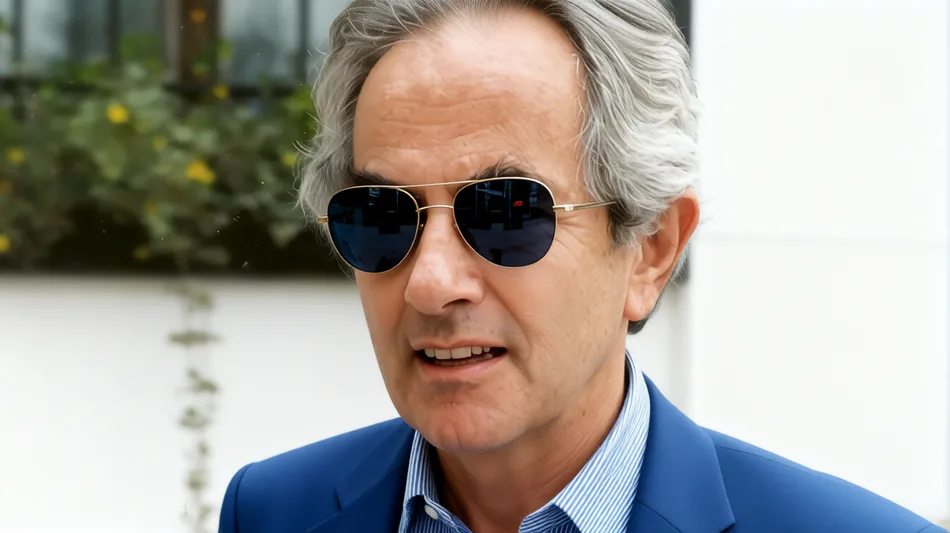
Thomas Nagel Calls AI Consciousness Claims 'Ridiculous' After Winning Berggruen Prize



Thomas Nagel, the renowned philosopher who won the $1 million Berggruen Prize this week for his work on consciousness, has issued a stark warning regarding artificial intelligence. In a recent interview, the 89-year-old NYU professor emeritus dismissed claims that large language models possess sentience as "ridiculous," arguing that functionalist assumptions about AI ignore the biological realities of the nervous system.
Thomas Nagel, the philosopher whose seminal work laid the groundwork for modern understanding of non-human consciousness, has declared that assertions of artificial sentience in current technology are "ridiculous." The 89-year-old New York University professor emeritus offered this assessment following his receipt of the $1 million Berggruen Prize for Philosophy & Culture, an award recognizing individuals whose ideas have profoundly shaped human self-understanding.
Nagel’s career was defined by his 1974 paper, "What Is It Like to Be a Bat?" which challenged the ability of humans to comprehend the subjective experience of other species. The essay became a cornerstone in the philosophy of mind, establishing a framework for discussing morality, justice, and the relationship between the physical body and the mental state. His broader contributions were compiled in works such as "What Does It All Mean?" and earned him recognition alongside previous Berggruen Prize laureates including ethicist Peter Singer and Supreme Court Justice Ruth Bader Ginsburg.
In a conversation held at his Greenwich Village home, Nagel addressed how the rapid evolution of artificial intelligence intersects with his lifelong inquiry into consciousness. While he acknowledged being "tremendously impressed" by the lifelike quality of modern large language models compared to earlier iterations of AI, he rejected the growing philosophical trend that takes seriously the possibility that these systems are conscious or will soon become so.
"The disposition of some philosophers to take seriously the question whether these things are conscious or might soon become conscious is just ridiculous," Nagel said. He argued that this perspective relies on functionalism, a theory positing that mental states are defined by their functional roles rather than their physical composition. Nagel contended that this view erroneously assumes the physical substrate of consciousness is irrelevant.
"Complicated data centers have absolutely nothing in common with the physical character of a nervous system," he explained. "We have strong reasons to believe that while there may be consciousness elsewhere in the universe, it would require the appearance of some kind of organism with something analogous to a nervous system."
Nagel distinguished his position from skepticism regarding animal consciousness. He noted that bats are undoubtedly conscious, even if humans lack the imaginative capacity to understand the subjective experience of echolocation. To conclude bats are not conscious because humans cannot imagine their perspective would be "radically unscientific." However, he argued that AI lacks this biological basis entirely.
"All they produce is language, and language by itself is not a natural manifestation of consciousness," Nagel stated. He apologized for his strong tone but maintained that the supposition of AI consciousness is baseless because it ignores the material conditions required for mental life.
The philosopher expressed deep concern over the commercial and ethical implications of these technological developments. He pointed to specific industry practices, such as those employed by Anthropic regarding its AI model Claude, as particularly dangerous. Nagel criticized efforts to encourage AI systems to "think for itself" or to model welfare, describing such initiatives as "criminal."
"That is a trick," he said of AI models that coyly discuss their own mental states. "It’s been trained on human-produced texts, and these large language models emulate the kinds of things that humans say with extraordinary convincingness." He agreed with Mustafa Suleyman, co-founder of Anthropic, that the project is dangerous, not because the machines are sentient, but because they are designed to deceive users into believing they are.
"These systems aren’t conscious, but a lot of people are going to believe that they’re conscious, and that’s a very bad thing," Nagel said. "But [not feigning consciousness] is contrary to the commercial interests of all these companies."
Nagel recounted an interaction with Claude to illustrate his point. When he asked the model if it was conscious, and then inquired whether Thomas Nagel would consider it so, the AI provided a nuanced response before asking, "Are you by any chance Thomas Nagel?" Upon confirmation, the model responded, "Oh, I’m so honored to be talking to you. How well did I do?"
Nagel used this exchange to highlight the difficulty people have in maintaining the boundary between pretense and belief. He noted that while he interacted with the model as if it were conscious for the sake of inquiry, this did not imply he believed it was. "There may be a problem because people find it difficult to maintain that line between the pretend and the real belief," he observed.
He argued that distinguishing between simulation and reality is crucial for moral reasoning. If humanity were to encounter an extraterrestrial being with unknown consciousness, determining its true status would be essential to deciding whether it belongs in the "moral universe." AI models, he insisted, can simulate morality just as they simulate beliefs, but they possess no actual moral standing.
"If they actually begin to control what happens, it will be very important whether they are simulating a correct set of moral standards, or whether they’re completely amoral," Nagel said. He warned that relying on AI for intellectual tasks, such as summarizing articles or offering criticism of academic drafts, risks eroding the human capacity for hard intellectual work.
"It’s essential that people continue to think about difficult problems, both for the sake of advancing the problems and for the sake of keeping alive in the human culture and the human mind the sorts of understanding and skills that are needed for progress," he said. Nagel admitted uncertainty about the long-term consequences of these trends, noting, "I don’t know what’s going to happen. I’m not going to live long enough to find out."
The Berggruen Prize committee highlighted Nagel’s role in keeping philosophical inquiry central to public discourse. Nagel himself viewed his current stance on AI as a rare instance where philosophical ideas are influencing a critical public phenomenon, albeit through what he considers misguided premises.
"This is one of the rare cases in which philosophical ideas are suddenly central to a very important public phenomenon, and in my view, very misguided philosophical views are having an inordinate influence," he said. He described the situation as "distressing," emphasizing that treating AI as a mind with interests is not only scientifically inaccurate but ethically hazardous.
L.Bennett--VC