Luxembourg Hosts European Coalition Meeting on Crisis Resilience



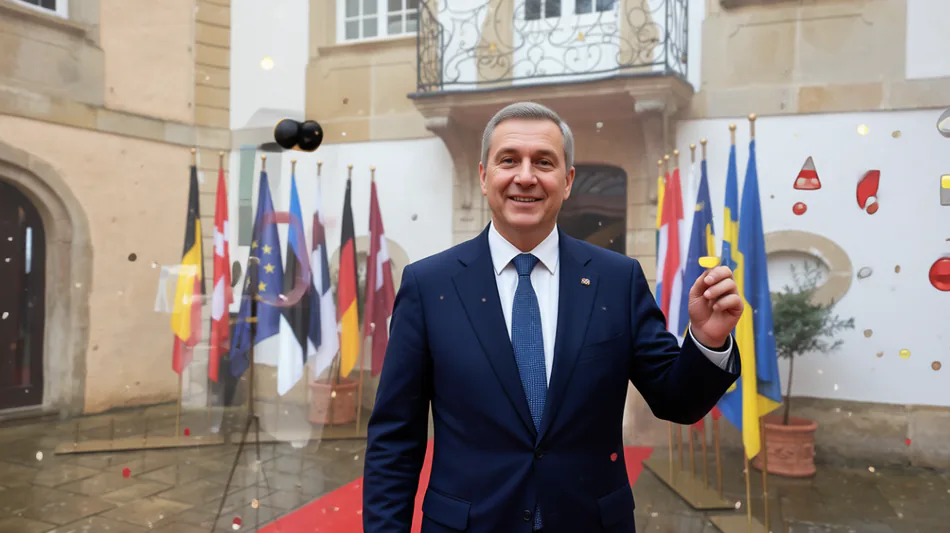
Representatives from twelve European countries convened at Luxembourg’s Bourglinster Castle on Friday for the fourth meeting of the European Coalition on Civil Preparedness and Resilience. The gathering focused on enhancing collective readiness for hybrid threats, natural disasters, and armed conflicts, with officials emphasizing that civil resilience must transcend national borders.
Twelve European nations convened at Bourglinster Castle in Luxembourg on Friday for the fourth meeting of the European Coalition on Civil Preparedness and Resilience. The gathering focused on strengthening collective readiness for hybrid threats, natural disasters, and armed conflicts, with officials emphasizing that civil resilience must transcend national borders.
The coalition was launched in May 2023 at the initiative of the Netherlands, with Luxembourg as a founding member. In just 18 months, the group has doubled in size, expanding from six to twelve participating countries. The primary objective is to ensure that essential services and population supplies remain intact during major disruptions.
Luxembourg’s Minister for Home Affairs, Léon Gloden, stressed that resilience knows no borders. He noted that any country, regardless of its geographical position, could fall victim to hybrid attacks. Consequently, collective security depends on jointly anticipating, preparing for, and responding to threats.
The meeting coincides with upcoming efforts by the European Commission to publish a joint analysis of risks and threats facing all 27 EU member states. Based on this assessment, new recommendations will be developed, including strategies for building up strategic reserves.
Hadja Lahbib, European Commissioner for Crisis Preparedness, stated that a collective realization is setting in across Europe: the continent is neither at war nor entirely at peace. She identified Europe’s greatest weakness as a matter of mindset, warning that today’s threats are often insidious and may include large-scale disinformation campaigns.
Ukrainian expert Valeria Ivanova, co-author of "Unbreakable Kherson," addressed the coalition in Bourglinster. Having lived through years of constant attacks, Ivanova explained that Ukraine has had to learn how to keep state institutions, energy supplies, and communications running under extreme duress. She argued that these are not theoretical ideas but real decisions, mistakes, and solutions tested in difficult conditions. Europe, she suggested, has a chance to learn from Ukraine’s experience before a major crisis hits.
Civil preparedness also requires individual action. In Luxembourg, every household recently received an information brochure as part of the Lëtz Prepare campaign. The aim is to ensure that, in an emergency, the population can manage independently for at least 72 hours thanks to having recommended reserves of water, food, and medicine at home.
Minister Gloden emphasized that this campaign is not intended to create fear but rather to reduce it by providing clarity and preparedness. The coalition hopes to bring more EU member states on board in the future. Gloden concluded that while the next crisis will come, a crisis must not become a catastrophe.
H.Miller--VC